Food container
Yunus al-Hazmi, Egypt or Syria, mamluk period, second half of 15th century
Tin-plated copper and brass, engraved ornamentation.
H: 13 cm / Diameter: 25 cm
UMP 4864
Purchased from Heinrich Kautsch in 1901, Paris.
This food container was produced during the late Burji Mamluk dynasty (1382–1517) in Egypt and Syria, when economic problems brought a shift away from creating more costly brass objects damascened with copper, gold and silver. The hammered copper bowl and cast brass lid are both plated with tin. The style of the engraved ornamentation,
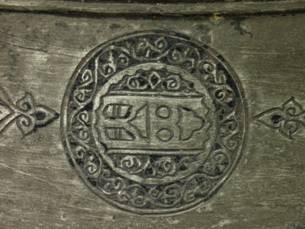
using geometric and foliage motifs and dominating calligraphy on the outer and inner surface of the container, is characteristic for craftsmanship during the Sunni Mamluk Sultanate. Small objects or also buildings were decorated with Mamluk emblems identifying the emir’s title and role in the court. An emblem referencing two offices held by the owner is pictured inside a circular medallion on the container.
The title of dawadar (Secretary) is depicted through the symbolic illustration of an open pen case in the centre of the medallion. Serviettes are presented in squares in the upper and lower parts of the medallion, denoting the owner’s other title – jamdar (Master of Robes). Inside oblong cartouches, congratulatory inscriptions are executed in thuluth calligraphy.
Calligraphy referencing the artist and other owners is inscribed on the container and the lid. The container bears the signature of a craftsman named Yunus al-Hazmi. Other inscriptions identify Amir Sheikh as purchaser of the container, which was intended for his beloved Habib Jan. A second cursive inscription enclosed in a simple cartouche apparently identifies a later owner of the container, Jamali ibn an-Nata.
This food container is the oldest object in the Near Eastern metals collection. Like many examples presenting Near Easter metalworking and craftsmanship in other materials, it was acquired through sculptor and medallist Heinrich Kautsch (1859–1943) during his residence in Paris. Originally in a collection dated up to the 18th century, the container was included in one of many consignments that would
expand the collection to encompass typical examples of eastern Mediterranean and Iranian metalworking from the 18th to 19th centuries. (JMl)
l mamluk period